
Blogs
How to Select the Best Investment Options in India: A Practical, Step-by-Step Guide for 2026

If you have ever sat down with a cup of chai and wondered, "Where should I actually put my hard-earned money?", you are not alone.
Today, an Indian investor is spoilt for choice. On one hand, you have the traditional, trusted Fixed Deposits (FDs) and physical gold. On the other hand, you have a booming ecosystem of Equity Mutual Funds, Direct Stocks, the National Pension System (NPS), Sovereign Gold Bonds (SGBs), and newer avenues like fractional real estate or peer-to-peer lending.
With so many choices, the natural instinct is to search for the "highest return" investment. But here is a truth that most successful wealth builders know: There is no single "best" investment in the world.
An investment that is perfect for a 25-year-old software engineer in Bengaluru building long-term wealth might be completely disastrous for a 60-year-old retired school teacher in Bhubaneswar who needs regular, stable monthly income.
At Easy2BeWealthy, our philosophy is simple: Wealth doesn’t fail because of bad products. It fails because of bad decisions, wrong asset allocation, high taxes, and emotional investing. Selecting a good investment option is not about chasing the latest market hype; it is about finding the perfect fit for your unique financial life.
In this step-by-step guide, we will break down exactly how to select the best investment options in India, keeping in mind the strict guidelines that govern responsible financial advice.
Step 1: Define Your "Why" Before You Start Investing Money
Before you even look at a mutual fund fact sheet or an FD interest rate, you must answer one fundamental question: Why am I investing this money?
Money without a purpose is just a number in a bank account. When you attach a specific purpose to your money, it transforms into a "goal." Goal-based investing is the most reliable way to build wealth because it dictates every other decision you will make. If you are wondering where to invest money, the answer always begins with your goal.
Common financial goals for Indian households include:
- Building an emergency corpus (3 to 6 months of household expenses).
- Funding a child’s higher education or marriage.
- Buying a dream home or a car.
- Creating a retirement corpus that beats inflation.
- Generating a regular, tax-efficient passive income.
Actionable Tip: Use the SMART framework for your goals. Make them Specific, Measurable, Achievable, Relevant, and Time-bound.
- Bad Goal: "I want to save money for my child's future."
- SMART Goal: "I need ₹50 Lakhs in 15 years for my child’s engineering education, adjusting for 6% education inflation."
Once the goal and the timeline are clear, the type of investment you choose becomes obvious. You would never use a 15-year retirement fund to pay for a vacation next month, and you should never park next year’s house down payment in the volatile stock market.
Step 2: Understand Your Time Horizon (The 3 Investment Buckets)
Your investment horizon is the length of time you can comfortably leave your money untouched before you need to withdraw it. This is arguably the most critical factor in selecting an investment, as it directly determines how much risk you can afford to take.
We can broadly categorise investment horizons into three buckets:
- Short-Term Horizon (0 to 3 Years)
- Priority: Capital protection and high liquidity.
- Why: If you need the money soon, you cannot afford a market crash. A 20% drop in the stock market is irrelevant if you need the cash in six months.
- Suitable Options: If you are looking for the best investment plan for 3 years, consider Liquid Mutual Funds, Ultra-Short Duration Debt Funds, Bank Fixed Deposits (FDs), or Arbitrage Funds (which are taxed favourably as equity).
- Medium-Term Horizon (3 to 7 Years)
- Priority: A balance between growth and stability.
- Why: You have enough time to ride out minor market fluctuations, but not enough time to recover from a massive, prolonged bear market.
- Suitable Options: If you are searching for the best investment plan for 5 years, a Balanced Advantage Fund (BAF), Aggressive Hybrid Fund, or high-quality Corporate Bond Fund often fits the bill perfectly. Sovereign Gold Bonds (SGBs) are also excellent for a 5-to-8-year view.
- Long-Term Horizon (7+ Years)
- Priority: Maximum wealth creation and beating inflation.
- Why: Over long periods, equities (stocks) have historically outperformed all other asset classes in India, despite short-term volatility. Time smoothens out market ups and downs.
- Suitable Options: For a long term investment, Equity Mutual Funds (Flexi-cap, Index Funds), Direct Quality Stocks, Public Provident Fund (PPF), and the National Pension System (NPS) are the top investment options in India.
Step 3: Decode Your Risk Profile (Capacity vs. Tolerance)
When advisors talk about "risk," many investors immediately think of how much money they might lose. But in financial planning, risk is actually two different things: Risk Tolerance and Risk Capacity. Confusing the two is a recipe for financial disaster.
Risk Tolerance (The Psychological Factor)
This is your emotional ability to handle market swings. It is the "sleep test." If your investment portfolio drops by 15% in a single month, will you panic and sell everything? Or will you stay calm, knowing it is a temporary market phase? Your age, personality, and past experiences shape this.
Risk Capacity (The Financial Factor)
This is your actual financial ability to absorb a loss without derailing your life goals. It is a mathematical reality, not an emotion. Your risk capacity depends on:
- Stability and growth potential of your income.
- Size of your emergency fund.
- Existing liabilities (home loan, personal loans).
- Number of financial dependents (children, aging parents).
- The time horizon of your goal.
The Golden Rule: Your investment strategy must be based on your Risk Capacity, not just your Risk Tolerance. Example: A 55-year-old with no pension and high medical expenses might have a high risk tolerance (they love the thrill of the stock market), but their risk capacity is very low. Putting their retirement corpus in small-cap stocks would be financially reckless, regardless of how "brave" they feel. This is why finding low risk investment options that still offer decent growth is crucial for such profiles.
Step 4: Look Beyond the "Highest Return" Trap
Walk into any bank or browse financial websites, and you will see bold advertisements: "Get 12% to 15% Returns!" or "Best investment plan with high returns!"
As a smart investor, you must learn to look past the headline number. A high advertised return does not automatically make an investment "good." You must evaluate the Post-Tax, Risk-Adjusted Real Return.
Many people search for safe investments with high returns in India. The honest truth is that in the financial world, risk and return are two sides of the same coin. Truly "safe" investments (like FDs or PPF) offer lower returns, while high return investment options (like equities) carry higher volatility.
Here are the silent wealth killers you must factor in:
- Inflation: If your FD gives you 7% returns, but inflation is running at 6%, your real return is only 1%. Your purchasing power is barely growing.
- Taxes: Returns are not what you earn; they are what you keep. Equity investments held for over a year are subject to Long-Term Capital Gains (LTCG) tax, while debt fund returns are added to your income and taxed at your slab rate. Always calculate returns after tax.
- Hidden Costs and Charges: Mutual funds have Expense Ratios. Insurance-cum-investment products (like traditional endowment plans) often have high premium allocation charges and surrender penalties that eat into your returns for the first few years.
- Liquidity Penalties: Some investments offer higher returns but lock your money away. If you break an FD prematurely or withdraw from certain pension schemes early, you may face a penalty.
Actionable Tip: Always compare investments on an "apples-to-apples" basis. Compare the post-tax return of an Equity Linked Savings Scheme (ELSS) with a Tax-Saving FD, factoring in the 3-year lock-in of both.
Step 5: The Power of True Diversification
You have probably heard the old saying: "Don’t put all your eggs in one basket." But many Indian investors misunderstand what diversification actually means.
Buying five different Large-Cap Mutual Funds does not mean you are diversified. If the stock market crashes, all five will fall together. That is concentration risk disguised as diversification.
True diversification means spreading your investments across uncorrelated asset classes. Asset classes are broad categories of investments that react differently to the same economic event.
- Equity (Stocks/Mutual Funds): High growth potential, high volatility. Performs well during economic expansion.
- Debt (Bonds/FDs/Debt Funds): Lower growth, high stability, regular income. Often performs well or remains stable when equities fall. These are the best fixed income investments for stability.
- Gold (SGBs/Gold ETFs): Acts as a hedge against inflation, currency depreciation, and geopolitical uncertainty.
- Real Estate: Provides tangible asset value and potential rental yield, though it lacks liquidity.
A well-diversified portfolio ensures that when one asset class is underperforming, another is likely holding steady or growing, thereby smoothing out your overall journey and reducing portfolio volatility. The exact ratio (e.g., 60% Equity, 30% Debt, 10% Gold) depends entirely on the risk capacity and horizon we discussed in Steps 2 and 3.
Step 6: Explore the Top Investment Avenues in India
To help you understand what are the best investment options in India, let us categorise them based on their primary purpose. This is not a recommendation to buy, but a map of the investment avenues in India.
-
For Safety and Emergency Funds
- Liquid Mutual Funds: Excellent for parking money you might need in a few days or months. Better returns than a savings account, with high liquidity.
- Bank Fixed Deposits (FDs): The traditional safe investment in India. Best for absolute capital protection, though returns are fully taxable.
-
For Steady, Moderate Growth (3 to 7 Years)
- Balanced Advantage Funds (BAF): These dynamically manage equity and debt exposure based on market valuations. They are often considered the best investment plan for 5 years for conservative investors who want some equity exposure without extreme volatility.
- Sovereign Gold Bonds (SGBs): Issued by the RBI, these offer 2.5% annual interest plus the appreciation of gold prices, with tax-free maturity after 8 years. One of the best investment schemes in India for gold lovers.
- Corporate Bond Funds: For investors seeking slightly higher yields than FDs, investing in highly-rated (AAA) corporate debt can be a good investment option.
-
For Long-Term Wealth Creation (7+ Years)
- Equity Mutual Funds (Flexi-Cap & Index Funds): Historically the best way to invest money for long-term goals. Flexi-cap funds allow the fund manager to shift across large, mid, and small caps based on market opportunities. Index funds offer low-cost exposure to the broader market (like Nifty 50).
- Public Provident Fund (PPF): A government-backed, tax-free (EEE status) long term investment plan. Ideal for the debt portion of a conservative portfolio, though it has a 15-year lock-in.
- National Pension System (NPS): Offers additional tax benefits (Section 80CCD(1B)) and is arguably the best investment plan for monthly income in India post-retirement, as it mandates the purchase of an annuity.
-
Advanced Avenues (For Experienced Investors)
- Unlisted Shares: Pre-IPO equity access for investors comfortable stepping ahead of the market.
- Peer-to-Peer (P2P) Lending: Direct-lending exposure for investors seeking diversification beyond conventional products. (Note: Requires strict due diligence and should only form a tiny part of a portfolio).
Step 7: Avoid Common Indian Investor Pitfalls
Even with a solid plan, human psychology can derail your investments. Be actively aware of these common traps:
--> Chasing Past Performance: Last year’s top-performing small-cap fund is rarely next year’s top performer. Past returns indicate how a fund handled specific historical market conditions, but they do not guarantee future results. Look for consistency over 5 to 10 years, not just 1-year spikes.
--> Falling for the "Guaranteed Return" Myth: Many search for the best guaranteed return investment plan. Understand this: only instruments like PPF, SSY, or Bank FDs offer guaranteed returns, and they barely beat inflation. Any private entity promising "guaranteed high returns" is likely running a scam. At Easy2BeWealthy, we do not sell dreams of guaranteed, unrealistic returns. We build disciplined, probability-based plans.
--> Mixing Insurance with Investment: Traditional endowment plans or money-back policies often offer dismal returns (4-5% pre-tax) while providing inadequate life cover. The golden rule of personal finance is to keep insurance and investment separate. Buy a pure Term Insurance plan for protection, and invest the rest in dedicated wealth-building instruments.
--> Emotional Investing (FOMO and Panic): Fear of Missing Out (FOMO) drives investors to buy at market peaks when everyone is talking about stocks. Conversely, fear drives them to sell at the bottom of a crash. Successful investing requires the discipline to stick to your plan, or better yet, automate it through Systematic Investment Plans (SIPs).
Step 8: How to Invest Money to Get Good Returns (The Execution)
Knowing what to invest in is only half the battle. Knowing how to execute is what separates successful investors from the rest. If you are wondering how to invest money to get good returns, follow these execution principles:
- Start with an Emergency Fund: Before investing a single rupee in long-term wealth creation, ensure you have 6 to 12 months of essential living expenses parked in highly liquid instruments. This is your financial shock absorber.
- Get Insured: Secure a pure Term Life Insurance policy (cover should be 15-20x your annual income) and a robust Family Health Insurance policy. Do not let a medical emergency wipe out your best investment assets.
- Automate Your Investments: Set up automatic SIPs (Systematic Investment Plans) in your chosen mutual funds. This enforces discipline and leverages "Rupee Cost Averaging," buying more units when the market is low and fewer when it is high.
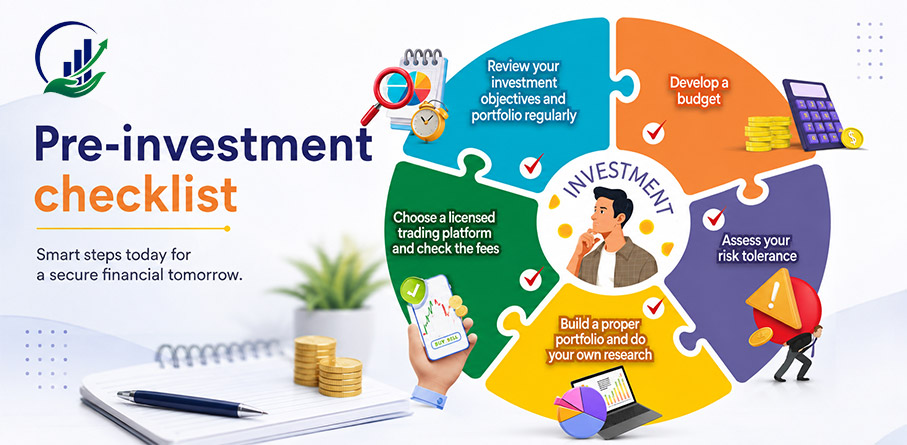
- Review and Rebalance Annually: Your life is dynamic. You might get a promotion, have a child, or pay off a home loan. Your financial plan must evolve with you. Rebalancing is the disciplined process of selling a portion of the asset class that has grown beyond its target percentage and buying more of the asset class that has underperformed. It forces you to do the hardest thing in investing: sell high and buy low.
Warning: Regular review does not mean frequent tinkering. Do not change your investments every time the market drops 2%. Frequent buying and selling trigger capital gains taxes, increase transaction costs, and disrupt the power of compounding.
The "Best" Investment is the One You Understand
At the end of the day, the smartest investment strategy is the one you can understand, stick to, and sleep well with.
A good investment option is not necessarily the most popular one, nor the one with the flashiest marketing. It is the one that serves a clear, specific purpose in your life, matches your risk capacity, accounts for taxes and inflation, and is provided by a credible, regulated entity.
Building wealth is a marathon, not a sprint. It requires ethical, practical, and intelligent decisions. It requires ignoring the noise of the daily market and focusing on your long-term vision.
Your Actionable Next Steps:
- Pause and Assess: Before making your next investment, write down the specific goal and the exact year you will need the money.
- Build Your Foundation: Ensure your emergency fund and adequate term/health insurance are in place first.
- Seek Professional Guidance: If you are unsure about asset allocation or tax implications, do not guess. Consult a SEBI-registered investment advisor who is legally bound to act in your best interest.
At Easy2BeWealthy, an AMFI and IRDAI registered financial advisory firm based in Bhubaneswar, we believe that financial freedom is not a privilege reserved for the ultra-rich. It is a logical outcome of informed decisions, disciplined asset allocation, and avoiding costly mistakes. Whether you are just starting your first SIP or looking to optimise a large corpus, our approach stays the same: transparent, unbiased, and client-first advice.
Because your wealth deserves nothing less than intelligent, ethical guidance.
Trusted External Resources for Further Reading
To empower your investment journey with authentic, unbiased data, we recommend bookmarking these official and highly respected Indian financial resources:
- SEBI Investor Education Website: For understanding investor rights, spotting frauds, and learning the basics of regulated markets. (investor.sebi.gov.in)
- AMFI (Association of Mutual Funds in India): For official mutual fund data, investor awareness modules, and verifying the registration of mutual fund distributors. (amfiindia.com)
- Value Research Online: An independent, trusted source for mutual fund ratings, portfolio analysis, and personal finance tools in India. (valueresearchonline.com)
- RBI Retail Direct: For safe, direct investment in Government Securities (G-Secs), State Development Loans (SDLs), and Sovereign Gold Bonds (SGBs). (rbiretaildirect.org.in)
Ready to build a portfolio that actually works for you? Reach out to the Easy2BeWealthy team for a transparent, unbiased, and client-first financial review. Let’s make your wealth journey ethical, practical, and intelligent.
Disclaimer: This article is strictly for educational and informational purposes. It does not constitute personalised financial, tax, or investment advice. Investing in financial markets involves inherent risks, including the potential loss of capital. Always consult a SEBI-registered investment advisor before making financial decisions.
TRENDING POST
RECENT POSTS
How to Build a Customized Investment Portfolio
Aug 21, 2026
NEWSLETTER
Subscribe my Newsletter for new blog posts. Stay updated from your inbox!
Leave a Comments