
Blogs
Is It Worth Paying a Financial Advisor? A Cost-Benefit Analysis for Indian Investors

You can buy a mutual fund on an app in three minutes. You can watch a dozen finance videos before lunch. So why would any sensible investor pay a financial advisor?
That question sounds logical until life stops behaving like a spreadsheet. A medical emergency. A job change. A market crash that makes you want to sell everything. Suddenly, free apps and YouTube tips feel very small. The real question is not whether advice is free. It is whether bad decisions are more expensive than good advice.
This is a straightforward cost-benefit analysis for Indian investors. No jargon. No product pushing. Just the numbers, the risks, and the value that a wealth advisor actually brings to the table.
The Real Cost: What You Pay for Financial Advice
Let’s start with the number every investor wants to know: what does a financial advisor charge in India?
The Securities and Exchange Board of India (SEBI) caps advisory fees for Registered Investment Advisers (RIAs). Under current rules, an RIA can charge either a fixed fee of up to ₹1.51 lakh per family per year, or up to 2.5% of Assets Under Advice (AUA) per year. That is the regulated ceiling, not a benchmark. Many advisers charge far less, especially for smaller portfolios.
But the visible fee is only one part of the cost story.
Mutual funds come in two flavours: direct plans and regular plans. Direct plans have no distributor commission and therefore a lower expense ratio. Regular plans include a commission of roughly 0.5% to 1.5% per year, which is paid out of your investment. Over twenty years, that difference compounds silently and can erase a meaningful chunk of your final corpus.
Here is the uncomfortable truth: many investors believe their advice is “free” because they do not write a cheque. In reality, the cost is embedded in the product. A financial advisory firm that operates on commissions may not charge you directly, but the product manufacturer pays them, and that payment comes from your returns.
Transparency matters more than the fee itself. A financial planning advisor who clearly discloses how they are paid is already giving you something valuable: clarity.
The Benefit: Where Advisors Actually Add Value
The mistake most investors make is judging an advisor only by portfolio returns. That is like judging a doctor only by how quickly they write a prescription.
Research now puts a number on the broader value of advice. A 2026 study of Indian households found that personalised financial advice delivered a net annual value of 1.53% to 3.01% after fees, with behavioural coaching alone contributing 91 to 169 basis points per year. In plain language: a good financial guidance relationship can add more value than it costs, even before you count the returns.
Where does that value come from?
- Behavioural discipline. The biggest destroyer of wealth is not a bad fund. It is panic selling, chasing last year’s winner, and stopping a SIP during a correction. A financial services advisor keeps you invested when your emotions tell you to run.
- Tax efficiency. The right asset location, capital gains planning, and regime selection can save more than the advisory fee in a single year. A financial advisory relationship that ignores tax is incomplete.
- Insurance review. Many families are over-insured in the wrong products and under-insured for the risks that matter. A structured review often frees up premium and closes dangerous gaps.
- Goal alignment. A wealth advisor connects your investments to real life: your child’s education, your retirement date, your parents’ healthcare. An app shows you returns. An advisor shows you the path.
A financial planning advisor is not paid to predict the market. They are paid to prevent the expensive mistakes that prediction-chasers make.
The Cost-Benefit Math Every Investor Should Run
Suppose you have a portfolio of ₹1 crore. A financial advisor charges ₹25,000 per year. That is 0.25% — a fraction of the SEBI cap.
Now consider the cost of one common mistake. A panic sale during a 20% correction on that ₹1 crore portfolio locks in a ₹20 lakh notional loss. Even if the market recovers, the investor who sold has missed the rebound and paid capital gains tax on the exit. One emotional decision can cost more than a decade of advisory fees.
Or consider a tax mistake. Poor capital gains planning on a large redemption can trigger a tax bill that exceeds the annual fee several times over. A financial advisory firm that plans withdrawals in advance can legally reduce that liability.
Or consider an insurance mistake. A ₹1 crore term cover bought at the wrong age can cost lakhs more in premium over its lifetime. An advisor's financial services review often pays for itself in the first year.
The cost-benefit conclusion is not complicated. If advice prevents even one major error, it has already justified its fee. Everything beyond that is a bonus.
How to Choose the Right Financial Advisor
Not all advice is equal. The regulatory label matters.
A SEBI-registered investment adviser operates under a framework designed around disclosure, suitability, and client interest. An AMFI certified mutual fund advisor holds a valid ARN, which means they have passed the required certification and are registered with the Association of Mutual Funds in India. You can verify an ARN on AMFI’s official portal before you hand over a single rupee.
Beyond registration, ask three questions:
- How are you paid? Commission, fee-only, or a hybrid? A wealth advisor who is transparent about compensation is easier to trust.
- Do you act as a fiduciary? A fiduciary is expected to put your interests first. Fee-only structures reduce product-related conflicts, though they are not the only path to ethical advice.
- What is included? A true financial planning advisor covers tax, insurance, retirement, and estate planning — not just mutual fund recommendations.
If an advisor only talks about products and never about your goals, your tax position, or your risks, you are talking to a distributor, not an advisor.
A Bhubaneswar Example of Client-First Advice
This is where a financial advisory firm like Easy2BeWealthy stands apart.
Based in Bhubaneswar, Easy2BeWealthy is an AMFI registered and IRDAI certified advisory practice led by Sumit Agarwalla, who brings nearly 25 years of experience across banking, investing, insurance, and wealth management. The firm has already advised over 350 families and manages a monthly SIP book of more than ₹50 lakh.
What makes Easy2BeWealthy a strong choice for investors looking for the best financial advisor in Bhubaneswar is not a promise of higher returns. It is the opposite of product pushing.
- Mutual funds and SIPs are built around goal-based portfolios, not market timing.
- Insurance is designed around real risk, with premiums reviewed for efficiency.
- Tax and premium reduction strategies help clients keep more of what they earn.
- Bonds, SDI, P2P lending, and unlisted shares are used selectively for diversification, not as gimmicks.
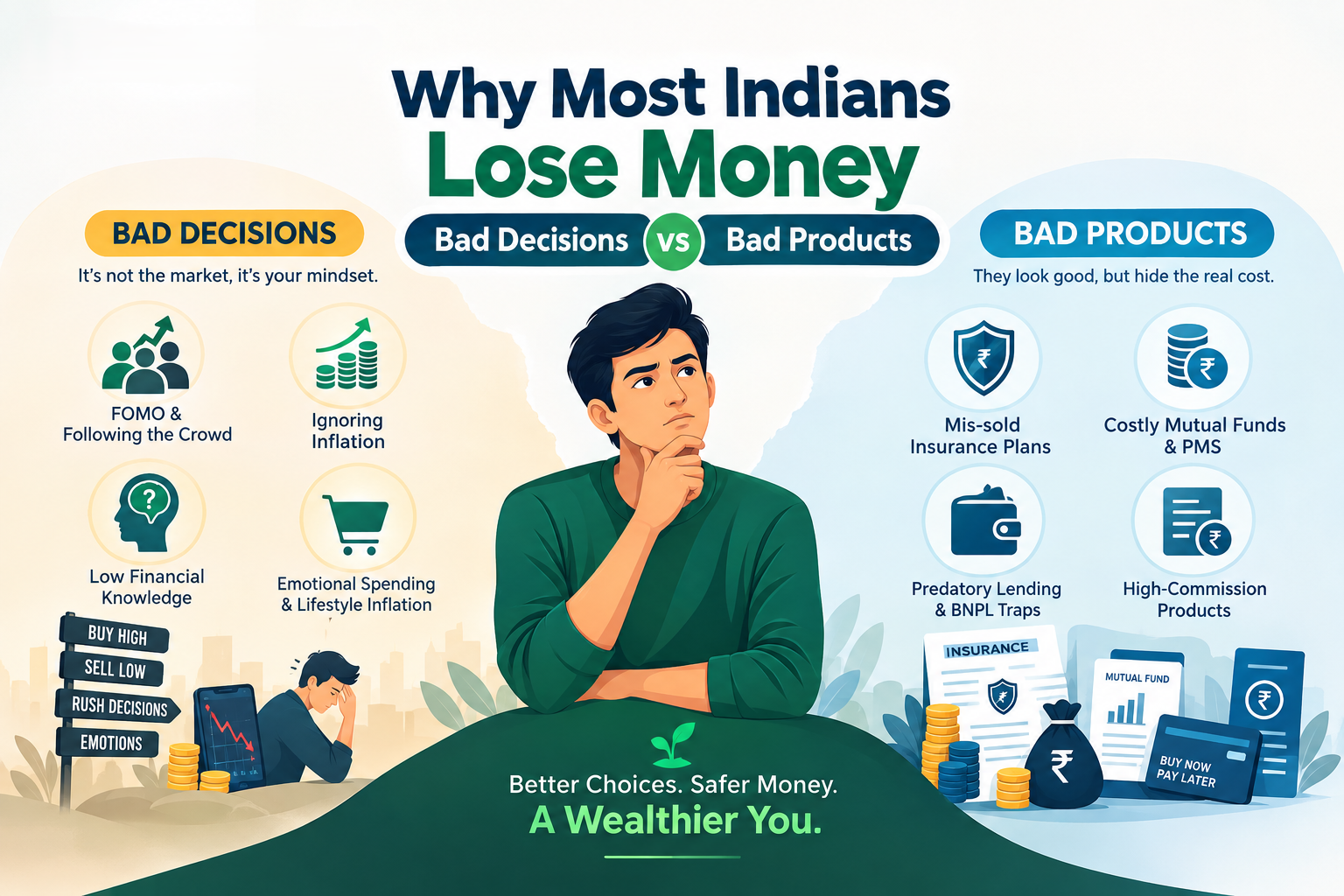
The firm’s approach is simple and honest: most investors do not lose money because of bad products. They lose because of poor decisions, high taxes, wrong asset allocation, and emotional investing. A financial guidance relationship with Easy2BeWealthy is built to address all four.
If you are tired of collecting advice from random sources and want a financial advisory partner who looks at your entire financial life, start a conversation with Easy2BeWealthy.
👉 Talk to Easy2BeWealthy today and get a transparent, goal-based financial plan built for your life — not for a product target.
The Bottom Line: Worth It for the Right Investor
Paying a financial advisor is worth it when the advice is holistic, transparent, and behaviourally effective. It is not worth it when you are paying for product recommendations alone.
The investor who needs an advisor most is not the one with the largest portfolio. It is the one with multiple goals, tax complexity, family responsibilities, and a tendency to make emotional decisions under pressure. In that situation, a wealth advisor functions as a financial fitness coach, a risk manager, and a second opinion — all at once.
The cost is real, but it is capped and knowable. The benefit is often invisible: the crash you did not panic through, the tax you did not pay, the insurance gap you closed, the retirement you did not delay.
If you are ready to move from scattered information to structured financial guidance, Easy2BeWealthy is a phone call away. Every relationship there starts with a conversation, not a pitch.
TRENDING POST



.webp)
RECENT POSTS
NEWSLETTER
Subscribe my Newsletter for new blog posts. Stay updated from your inbox!
Leave a Comments